
Workshop No. 1
A rainy Wednesday in the Bayview, six builders, one long table, and a pile of flat plywood that became a room full of light.
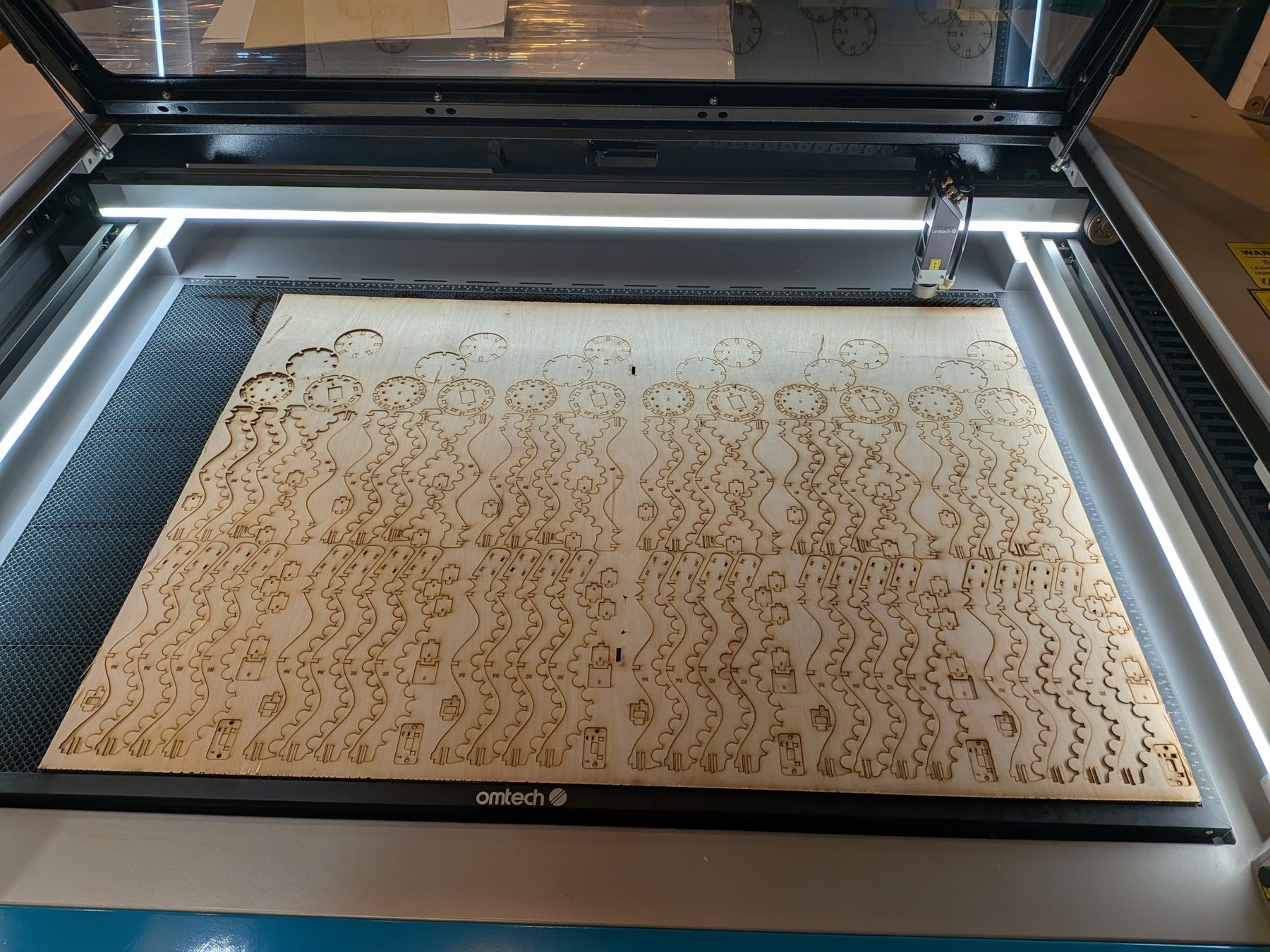
The forecast promised a downpour and delivered one. We told everyone to bring a jacket, knock if the door was shut, and bring their own drinks (we had tea). By six the studio was warm, the kettle was on, and six people had shaken off the rain around the long table.
First, the instrument
We opened with a short tour of Splanc, the software platform that drives our lights, demonstrated on a COIL lamp. Splanc treats a fixture as an instrument rather than a light switch: you map the LEDs once, then compose effects for them, play them live, or hand the controls to an AI agent and describe the mood you want.
Then, the build
Each builder got a kit: laser-cut plywood ribs and rings, a coil of braided LED rope, a Splanc controller, and the hardware to hold it together. The rope winds around the plywood spine one ring at a time, and the lamp takes its shape as you go, a little like coiling a pot. Painting was optional. Most people kept the raw birch.
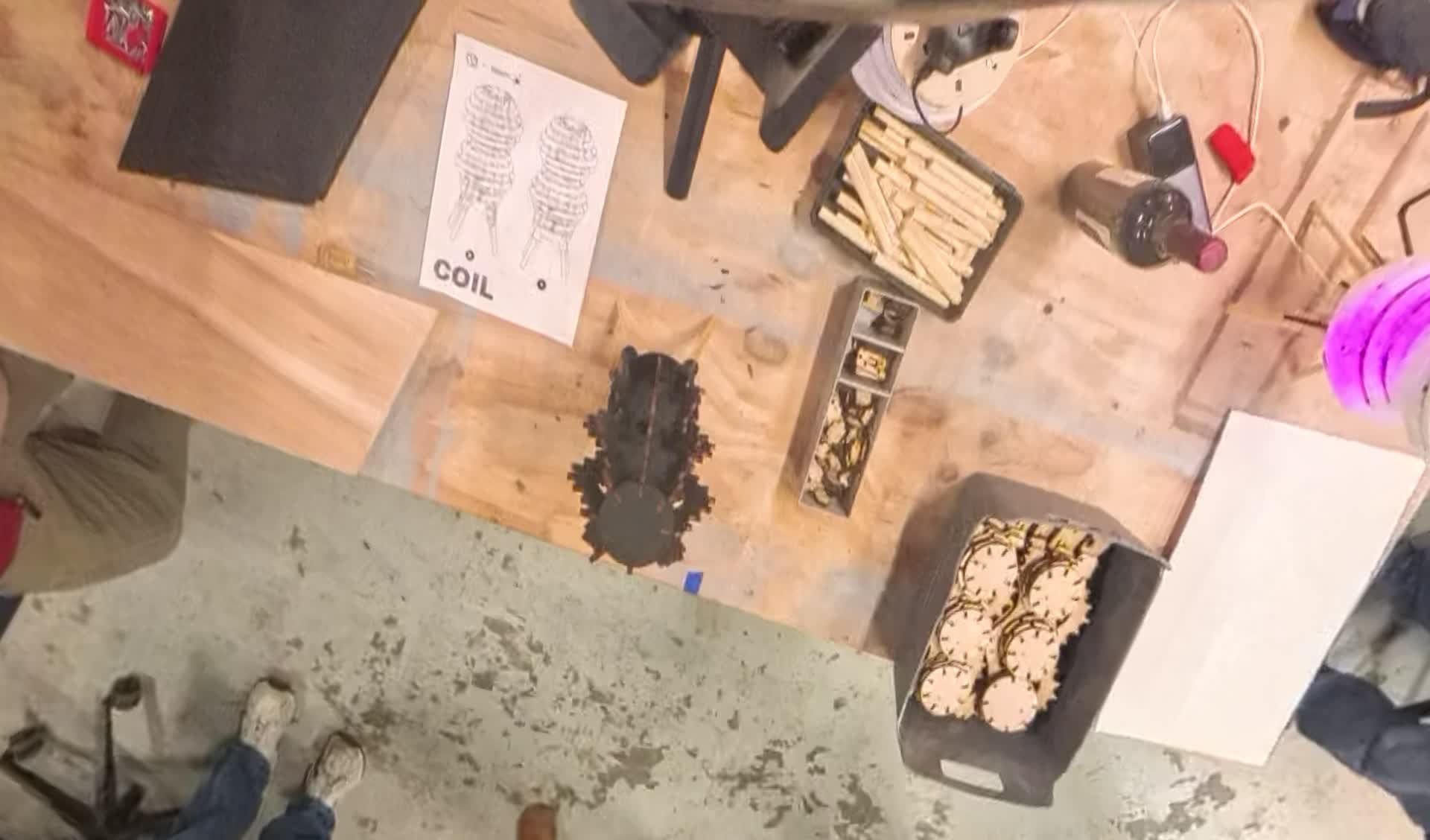
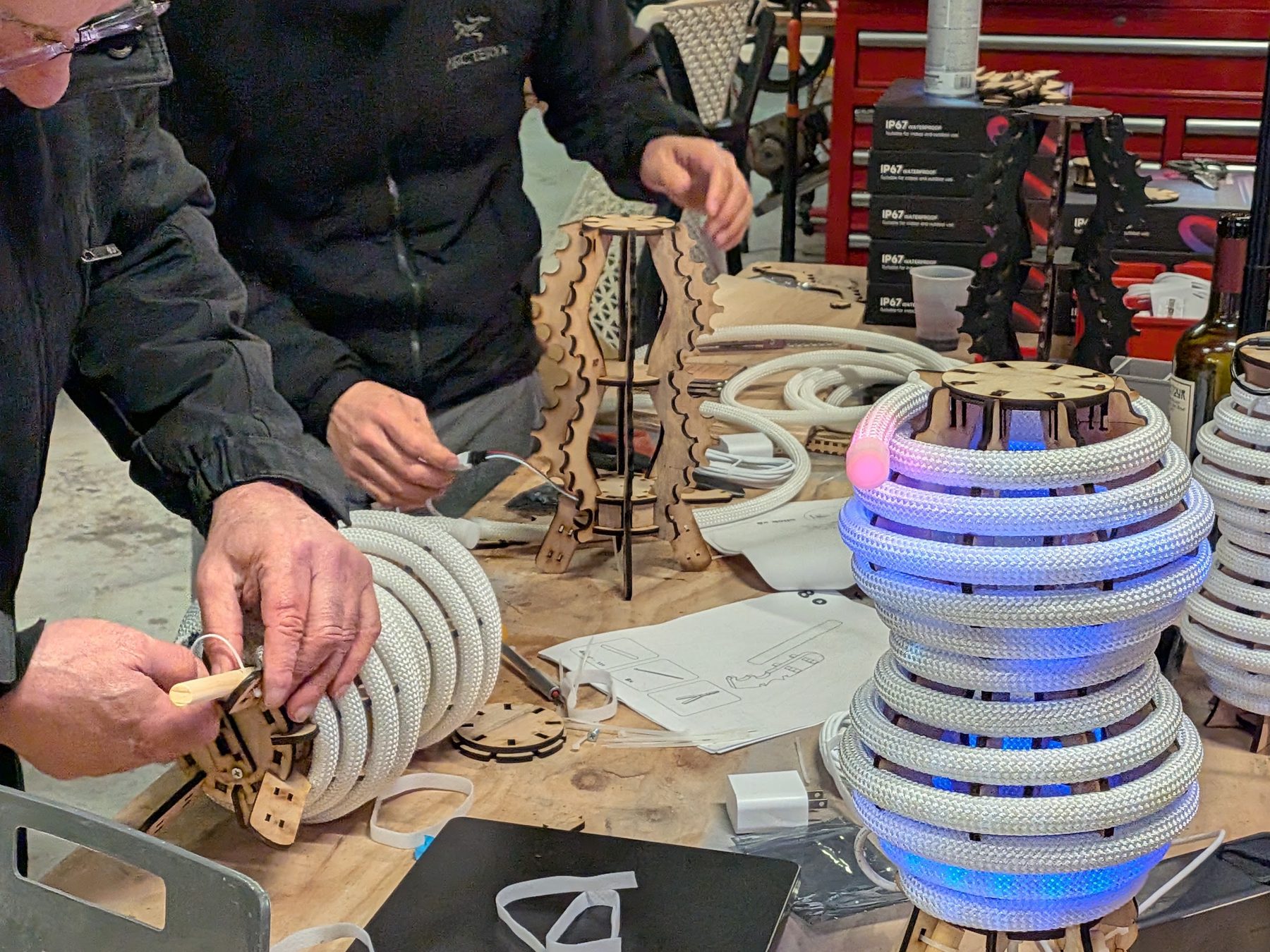
The room went quiet the way rooms do when everyone is concentrating with their hands. Then the first lamp was plugged in, someone said "oh," and it got loud again.
Lights down
Once lamps were standing, we turned off the shop lights. The table became a small skyline. Builders opened Splanc on their laptops and started writing effects: slow breathing gradients, fast chases, colour fields that drifted from one lamp to the next. We linked the lamps together so a single effect could travel across all of them, and a couple of MIDI controllers let people play the room live, turning knobs and watching the light answer.
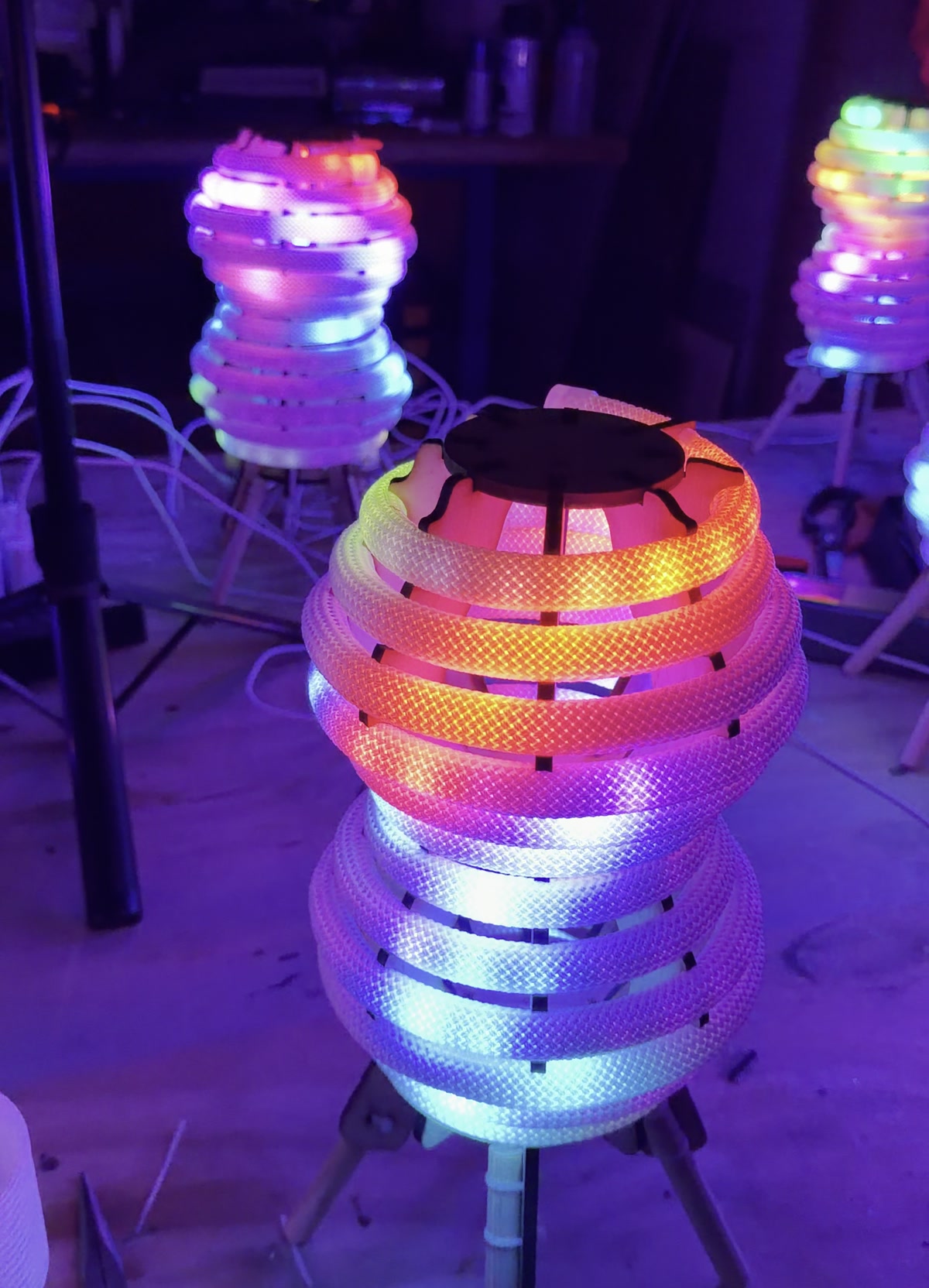
Everyone went home with the lamp they built. Builders are invited to bring theirs back for the Splanc launch party on 5 December, where the lamps will play together as one piece.
Take-aways
Want a COIL of your own without the workshop? It's open for preorder in seven finishes. Want to come to the next workshop? Join the list on the store page and we'll write when dates are set.